
Fleet operators today manage far more than vehicles. They oversee routes, fuel costs, driver behavior, and maintenance schedules across dozens or even thousands of assets. This is where predictive analytics in fleet management has become a game-changer, turning raw operational data into forward-looking insights that prevent costly problems before they happen.
Instead of reacting to breakdowns, delays, or safety incidents after they occur, predictive analytics in fleet management allows companies to anticipate issues in advance. In this guide, we’ll explore what this approach involves, how it works, and why it’s rapidly becoming essential for modern fleet operations.
At Linkinfotech, we work closely with businesses looking to turn raw operational data into clear, actionable insights. Our data analytics and research solutions help fleet operators and other data-driven teams move from reactive decision-making to proactive, predictive strategies.
What Is Predictive Analytics Fleet Management?
Predictive analytics fleet management refers to using historical and real-time data to forecast future events within fleet operations. This includes predicting vehicle breakdowns, optimal maintenance timing, fuel consumption patterns, and even driver risk levels.
Rather than relying solely on scheduled maintenance or reactive repairs, predictive analytics fleet management uses sensor data, telematics, and historical trends to identify warning signs early. This shift from reactive to proactive management represents one of the most significant advancements in fleet operations over the past decade.
At its core, this approach answers a critical question: based on everything we know about a vehicle’s performance history, what is likely to happen next, and how can we act before it becomes a problem?
Why Predictive Analytics Matters in Fleet Management
Fleet operations involve enormous complexity, with dozens of variables affecting cost, safety, and efficiency simultaneously. Predictive analytics in fleet management brings structure and foresight to this complexity.
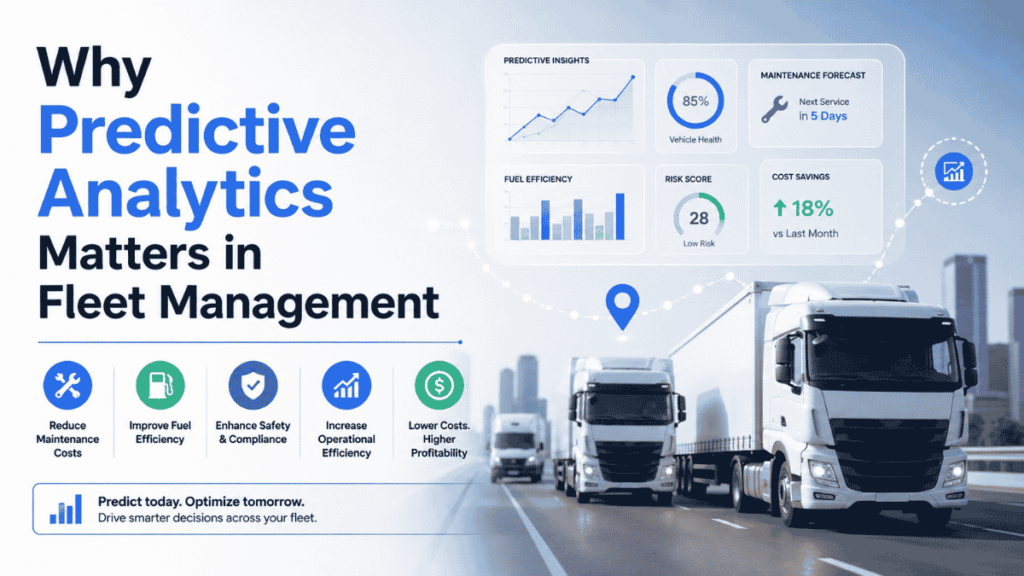
Here’s why this approach has become so valuable:
- It reduces unplanned vehicle downtime by predicting failures before they occur
- It lowers maintenance costs by shifting from scheduled to condition-based servicing
- It improves driver safety through early identification of risky behavior patterns
- It optimizes fuel consumption by analyzing driving patterns and route efficiency
- It extends vehicle lifespan through timely, data-driven maintenance decisions
Because of these benefits, predictive analytics fleet management has moved from a competitive advantage to an operational necessity for companies managing large vehicle fleets.
Turn Survey Data Into Business Decisions Faster
Technology-driven market research for faster, smarter insights.
How Predictive Analytics Fleet Management Works
Understanding the mechanics behind predictive analytics fleet management helps clarify why it delivers such measurable results. The process generally follows several key stages.
Step 1: Data Collection
Modern fleet vehicles are equipped with telematics devices and sensors that continuously capture data. This includes engine performance, fuel usage, braking patterns, tire pressure, and GPS location. This constant stream of information forms the foundation for every prediction that follows.
Step 2: Data Integration
Raw sensor data alone isn’t enough. It must be combined with historical maintenance records, driver logs, and route information to create a complete operational picture. This integration step ensures predictions account for the full context surrounding each vehicle’s performance.
Step 3: Pattern Analysis
Once integrated, the data is analyzed to identify patterns and trends that precede common issues. For example, a gradual increase in engine temperature readings might historically correlate with impending mechanical failure. Identifying these relationships mirrors the broader principles behind correlation analysis in statistics, where analysts look for measurable relationships between variables before concluding.
Step 4: Predictive Modeling
Using the patterns identified during analysis, predictive models forecast the likelihood of future events, such as component failure or optimal maintenance timing. These models continuously improve as more data becomes available over time.
Step 5: Actionable Insights
Finally, predictions are translated into specific, actionable recommendations for fleet managers, such as scheduling maintenance for a specific vehicle before a predicted failure date.
Key Applications of Predictive Analytics in Fleet Management
Predictive analytics in fleet management touches nearly every aspect of fleet operations. Here are the most impactful applications currently in use.
Predictive Maintenance
Perhaps the most well-known application, predictive maintenance uses sensor data to forecast when a vehicle component is likely to fail. Rather than following a fixed maintenance schedule, fleets can service vehicles based on actual condition, reducing both unnecessary maintenance and unexpected breakdowns.
Fuel Efficiency Optimization
By analyzing driving patterns, route choices, and vehicle performance, predictive analytics fleet management identifies opportunities to reduce fuel consumption. This might include recommending route adjustments or flagging inefficient driving behaviors like excessive idling.
Driver Safety Monitoring
Predictive models can analyze driving behavior, such as harsh braking or speeding patterns, to identify drivers at higher risk of accidents. Early intervention through coaching or training can significantly reduce incident rates before they occur.
Route Optimization
Historical traffic patterns, weather data, and delivery timelines combine to help predictive systems recommend optimal routes. This reduces delivery times while minimizing fuel usage and vehicle wear.
Asset Lifecycle Management
Predictive analytics fleet management also helps organizations determine the ideal time to retire or replace vehicles, balancing ongoing maintenance costs against replacement expenses for maximum long-term value.
Predictive vs. Prescriptive Approaches in Fleet Management
It’s worth distinguishing predictive analytics from prescriptive analytics within fleet management contexts. While predictive analytics in fleet management forecasts what is likely to happen, prescriptive approaches go a step further by recommending specific actions to take in response.
For example, a predictive model might forecast that a vehicle’s brake pads will likely fail within two weeks. A prescriptive system would then recommend the exact service date, technician assignment, and parts needed. Reviewing a clear example of prescriptive analytics helps illustrate how these two approaches work together, with prediction forming the foundation that prescriptive recommendations build upon.
Understanding this distinction also connects to the broader conversation around predictive analytics versus data analytics, since fleet managers often need clarity on which analytical approach best suits their specific operational goals.
Tools and Technologies Behind Predictive Analytics Fleet Management
Implementing predictive analytics fleet management requires the right combination of hardware and software. Telematics devices collect raw data, while analytics platforms process and interpret that information to generate forecasts.
When evaluating which systems to adopt, fleet managers should consider the broader landscape of available data analysis tools, since some platforms specialize specifically in fleet operations while others offer more general-purpose analytical capabilities that can be customized for transportation use cases.
Time-Based Trends in Fleet Data
Many predictive fleet applications rely heavily on analyzing how metrics change over time. Engine performance, fuel efficiency, and maintenance needs all follow patterns that unfold gradually rather than appearing suddenly.
This makes techniques similar to time series analysis particularly relevant, since tracking how specific metrics evolve across weeks or months often reveals early warning signs long before a problem becomes critical.
Program Complex Questionnaires and Skip Logic
Expert survey scripting, advanced routing, and multi-language configurations for flawless data collections.
Grouping Vehicles and Drivers for Better Insights
Not all vehicles or drivers behave the same way, even within a single fleet. Grouping similar vehicles or driving patterns together allows fleet managers to identify trends specific to particular vehicle types, routes, or driver profiles.
This grouping approach shares conceptual similarities with cluster analysis in data mining, where data points with shared characteristics are grouped to reveal patterns that wouldn’t be visible when analyzing the entire fleet as a single, uniform dataset.
Benefits of Predictive Analytics Fleet Management
Beyond preventing breakdowns, predictive analytics fleet management delivers measurable value across multiple operational areas.
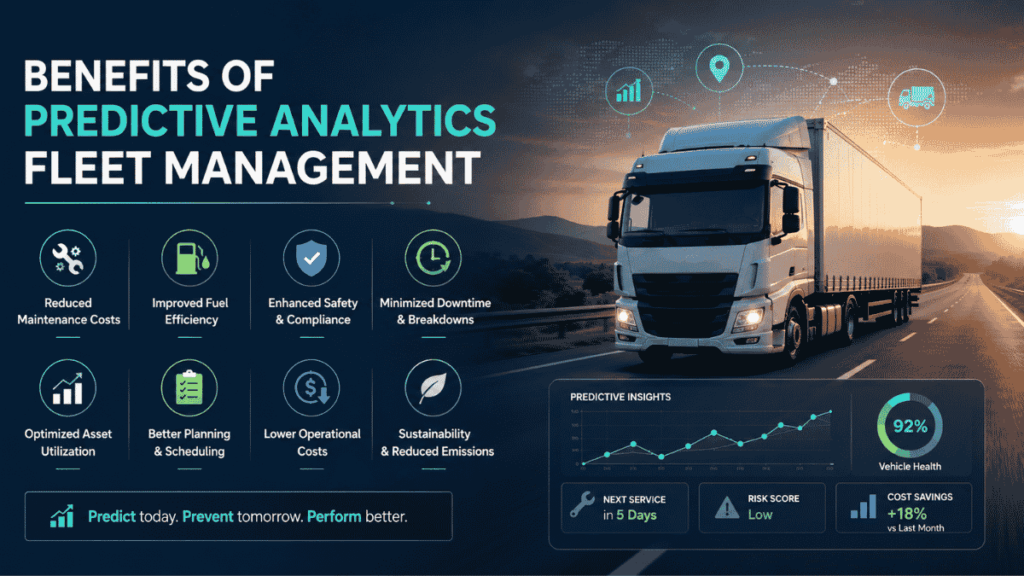
- Reduced downtime – Vehicles spend less time out of service due to unexpected repairs
- Lower maintenance costs – Condition-based servicing avoids unnecessary part replacements
- Improved safety outcomes – Early identification of risky driving behavior reduces accidents
- Better fuel economy – Optimized routes and driving patterns lower overall fuel spend
- Extended asset lifespan – Timely maintenance decisions keep vehicles in service longer
- Stronger regulatory compliance – Predictive systems help ensure vehicles meet safety and emissions standards consistently
These benefits compound over time as fleets accumulate more historical data, making predictive models increasingly accurate.
Common Challenges in Implementing Predictive Analytics Fleet Management
Despite its advantages, adopting predictive analytics fleet management isn’t without obstacles. Fleet managers should be prepared for the following challenges.
- Data quality issues – Inconsistent or incomplete sensor data weakens prediction accuracy
- Integration complexity – Combining telematics data with existing maintenance and dispatch systems takes time
- Upfront investment – Sensors, software, and training require meaningful initial costs
- Change management – Drivers and staff must adapt to new monitoring and workflow processes
- Model accuracy over time – Predictive models require ongoing refinement as fleet conditions change
Recognizing these challenges early allows organizations to plan realistic implementation timelines and set appropriate expectations for return on investment.
Best Practices for Successful Implementation
To get the most value from predictive analytics fleet management, consider these best practices:
- Start with high-impact use cases, such as predictive maintenance, before expanding further
- Ensure telematics devices are properly calibrated for accurate data collection
- Integrate predictive insights directly into existing maintenance and dispatch workflows
- Continuously refine predictive models using updated fleet performance data
- Train drivers and staff on how predictive insights translate into daily operational changes
- Measure results consistently to demonstrate return on investment over time
Following these practices helps ensure predictive analytics initiatives deliver measurable, lasting operational improvements.
Interpreting Fleet Data Correctly
As with any data-driven initiative, correctly interpreting results matters just as much as collecting accurate data. Fleet managers should approach predictive outputs with the same rigor applied to broader data analysis and interpretation in quantitative research, ensuring conclusions are supported by sufficient data rather than isolated incidents or short-term fluctuations.
Turn Complex Datasets Into Strategic Business Growth
Enterprise-grade data processing, statistical analysis, and customized tabulations to power your insights.
Conclusion
Predictive analytics fleet management has transformed how organizations approach vehicle maintenance, safety, and operational efficiency. By shifting from reactive responses to proactive, data-driven decision-making, fleets can reduce downtime, lower costs, and improve safety outcomes simultaneously.
While implementation requires careful planning and ongoing refinement, the long-term benefits make predictive analytics fleet management an increasingly essential investment. As telematics technology continues to advance, the accuracy and value of these predictive insights will only continue to grow.
FAQs
It’s used to forecast vehicle maintenance needs, driver risk levels, and fuel efficiency opportunities, helping fleet managers make proactive rather than reactive decisions.
Predictive maintenance services vehicles based on actual condition data, while scheduled maintenance follows fixed time or mileage intervals regardless of a vehicle’s real-time performance.
Common sources include telematics devices, GPS tracking, engine sensors, historical maintenance records, and driver behavior logs.
No. While large fleets see substantial cost savings, smaller fleets also benefit from reduced downtime and improved safety, even with fewer vehicles to monitor.
Accuracy improves over time as more historical data is collected, though models require ongoing refinement to stay accurate as fleet conditions and vehicle types change.